
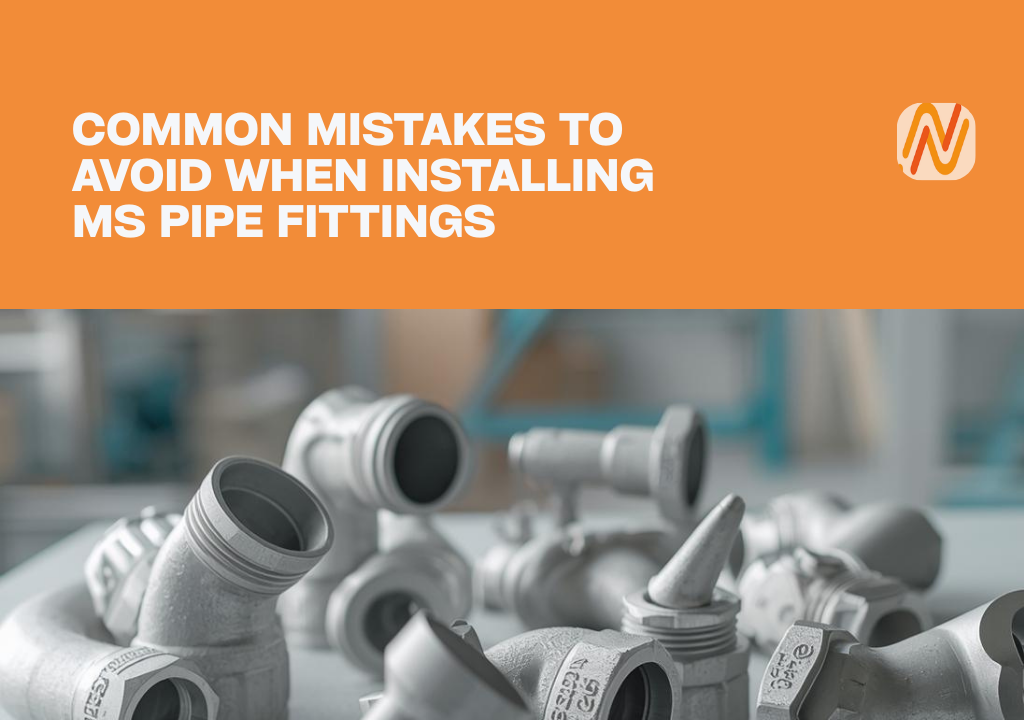
For any industrial piping system to be effective, long-lasting, and safe, installing MS pipe fittings is essential. MS pipe fittings are the foundation of fluid transfer in everything from manufacturing facilities and building sites to water supply lines and firefighting networks.
But even little installation mistakes can result in costly downtime, corrosion, leakage, and pressure failure. The majority of problems with industrial pipework are caused by preventable installation errors rather than the material itself.
Here are the most common mistakes to avoid when installing MS pipe fittings — and how to ensure a reliable, long-lasting connection.
Choosing fittings solely on the basis of availability rather than application need is one of the major blunders installers make.
Different fitting types, such as elbows, reducers, sockets, tees, bends, caps, or flanges, are needed for different systems. The pipeline as a whole may be compromised by selecting the incorrect thickness (A, B, or C class), size, or pressure class.
Inadequate welding or threading can be caused by rust, dust, oil, and moisture on pipe ends. Inadequate surface preparation results in gaps that eventually lead to leaks.
Poor joint strength, misalignment, and uneven edges are the results of improper pipe cutting. Many installers cut pipes quickly, disregarding the requirement for burr-free, straight cuts.
For sturdy, leak-proof couplings, MS pipe fittings are frequently welded. Cracks and early failure might result from inadequate, weak, or overheated welds.
Threaded MS pipe fittings require tight sealing, but too much force can crack the fitting while insufficient tightening leads to leakage.
One of the most common installation issues is improper alignment. Misalignment creates stress on joints, especially during pressure surges.
Cheaper fittings may seem cost-effective initially but can compromise the system’s reliability. Low-quality MS fittings often have inconsistent thickness, poor threading, or weak welding edges.
Skipping hydrostatic or pneumatic testing is one of the riskiest mistakes. Without proper testing, hidden leaks or weak joints go unnoticed until system failure.
MS pipe fittings are durable, but they still require protection from corrosion, especially in humid, chemical, or outdoor environments.
Even the best fittings fail if handled by untrained personnel. Poor workmanship is a leading cause of installation errors.
Any industrial piping system’s durability and performance depend on the proper installation of MS pipe fittings. In addition to protecting the system, you can save a lot of time and money over time by avoiding these typical errors, which include improper welding, misalignment, incorrect fitting selection, and skipping tests.
The secret to creating genuine connections that guarantee genuine growth for businesses that depend on robust, long-lasting, and precisely constructed fittings is selecting the appropriate material and adhering to correct installation procedures.