
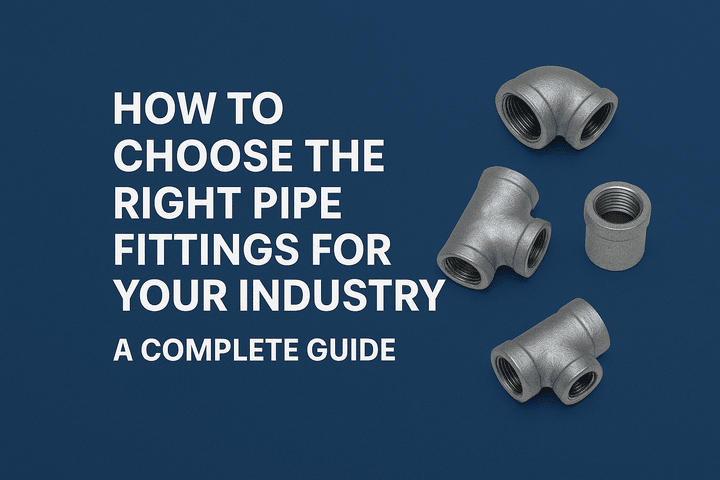
This is never an easy choice as there are many materials, sizes, and styles in which pipe fittings can be made. However, choosing the right fitting for your application is essential when trying to achieve maximum efficiencies and safety. The following comprehensive guide will point out key things you should consider in choosing appropriate pipe fittings for your needs.
1. Identify Your Industry
Different industries have different demands when it comes to pipe fittings. Be it manufacturing, plumbing, HVAC, food and beverage, or oil and gas, knowing your industry will help narrow down your choices. Each of these sectors may have set regulations and standards that stipulate the kinds of fittings you should use.
2. Observe the Environment
Consider the working environment where these fittings are to be applied. Factors such as temperature, pressure, and even exposure to certain chemicals will strongly affect the choice of material. High temperatures may require heat-resistant materials, while corrosive liquids will need special alloys or plastic fittings.
3. Overview of Common Materials
Each material has its own set of advantages and disadvantages:
They are designed from materials such as copper, stainless steel, and carbon steel. They are very strong and resilient; hence, they can be used at high pressure. However, corrosion can also be a problem with these materials.
Plastic fittings are made from PVC, CPVC, or PEX and are lightweight, corrosion-resistant, and less expensive. They might not be exactly what you want if you are concerned with working at very high temperatures and pressures.
Composite Fittings: These combine properties of both metal and plastic, offering resistance to chemicals and corrosion while maintaining strength.
4. Consider the fit and size
Proper sizing is absolutely essential for effective operation. Always use standards (such as ASME, ASTM, ISO, etc.) relevant to your industry to ensure compatibility with existing systems. Measure the diameter and length precisely, and consider the need for additional fittings such as elbows, tees, or couplings to complete your system.
5. Sourcing from Reputable Manufacturers
Quality is important in terms of both safety and durability. Choose pipe fittings from accredited manufacturers that follow all industrial standards, available on platforms like Indiamart, Tradeindia etc. Check for certifications that demonstrate compliance with safety norms and quality assurance.
6. Assess Vendor Support
Decide whether the vendor offers customer support, technical guidance, and warranty options. A knowledgeable supplier can be of great help to you while making complicated choices and can help you make the right selection concerning what you need for your system.
7. Compatibility Testing
Do tests before finalizing your selection to ensure that the fittings will work properly with your existing pipe system. This is particularly true if you are mixing materials or refurbishing an old system.
8. Be informed regarding relevant regulations.
Keep updated about the regulatory requirements of the industry to avoid penalties and non-compliances. Understand changes in safety standards, material requirements, and environmental regulations related to your sector.
Conclusion
The selection of appropriate pipe fittings is very vital in the facilitation of the efficiency and safety of your systems. By knowing what your industry specifically calls for, considering the environment in which it will be used, and choosing quality material, you make an informed decision that shall support your operations. Remember, investing time in research and quality sourcing can save you much in repairs and replacements later on. For more details about picking the best pipe fittings for your applications, make sure to consult Nirmankar. We’ll guide you further as you make a choice among options that best suit your industry.